SNAP Cuts Hit Home in June
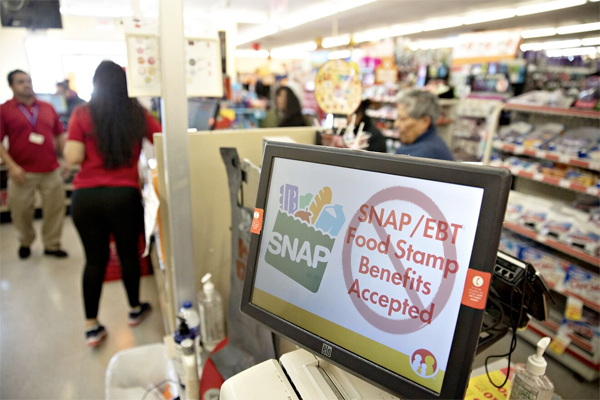
Now is the moment when people in Delaware County and across the country may feel the bite of the Trump administration’s cuts to the Supplemental Nutritional Assistance Program, the federal government’s largest and most important anti-hunger program.
By June 1, some SNAP recipients must have provided documentation to the county’s Department of Social Services that they have met SNAP’s new work requirements in March, April, and May. If they haven’t, they may not receive their benefits beginning in June.
At last official count, SNAP provided food support for nearly 4800 people in Delaware County—over a tenth of our population. SNAP supplies low-income people with hundreds of dollars in food aid per month, depending on their level of need.
The SNAP cuts, which were contained in the Republicans’ so-called “One Big Beautiful Bill” passed in July 2025, undermined SNAP by imposing strict new work rules. They require “able-bodied adults without dependents” to prove that they spent up to 80 hours per month working, in school, or volunteering.
These rules are difficult or impossible for many SNAP recipients to meet. They also put a heavy burden on the often-understaffed county governments that administer SNAP.
“The work requirement is basically a way to throw people off SNAP altogether,” said Joyce St. George, who co-founded the Community Pantry in Arkville. “Where are people going to find a job around here?” The Pantry is one of 15 food pantries in communities across Delaware County that provide a backstop for those in need of food and other items.
“Most people in our area who have trouble getting access to food also have no insurance, they may have health issues, their housing is a problem,” says St. George. “So the SNAP cut is not a standalone issue. We’re being attacked from a lot of angles.”
Just the prospect of the SNAP work requirements has sparked a fall-off in SNAP participation across New York State. In Delaware County, about 6 percent of people who had been enrolled in SNAP as of January 2025 have already left the program. But the rubber meets the road beginning on June 1.
More SNAP hits are in store: Under the new law, beginning in October 2027, the federal government will fully fund SNAP only in states that make mistakes in fewer than 6 percent of their payments. New York’s error rate is closer to 14 percent.
What can we do? Most immediately, St. George urges people to contribute to their local food pantry. Although pantries can’t fill the gap left by SNAP cuts, they play a critical role.
The pantries are supported in part through Delaware Opportunities, based in Hamden. Contributions are welcome there as well.
Many organizations around the state have called on Governor Hochul and state legislators to use state money to “backfill” the lost funds for SNAP as well as the Women, Infants, and Children (WIC) nutritional program, which was also hit by the Trump bill.
About 80 organizations have joined a statewide “Invest in Our New York” campaign that would change state tax laws to “ensure that the very rich and highly profitable corporations pay their share” to support New Yorkers’ basic needs.
Ultimately, we need to elect a President and a Congress that will restore and improve SNAP and make people’s well-being their top priority.